The Financial Crisis Query Commission discovered that in 2008, GSE loans had a delinquency rate of 6. 2 percent, due to their standard underwriting and qualification requirements, compared to 28. 3 percent for non-GSE or private label loans, which do not have these requirements. Furthermore, it is not likely that the GSEs' enduring economical housing goals motivated lending institutions to increase subprime lending.
The objectives came from in the Real estate and Community Advancement Act of 1992, which passed with overwhelming bipartisan assistance. Despite the fairly broad mandate of the affordable real estate objectives, there is little proof that directing credit towards customers from underserved neighborhoods caused the real estate crisis. The program did not substantially alter broad patterns of mortgage loaning in underserviced communities, and it operated rather well for more than a years prior to the personal market began to heavily market riskier mortgage items.
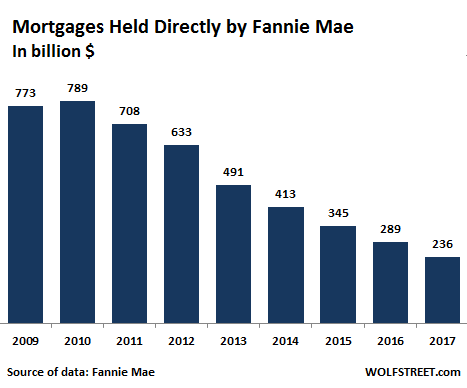
As Wall Street's share of the securitization market grew in the mid-2000s, Fannie Mae and Freddie Mac's income dropped considerably. Determined to keep shareholders from panicking, they filled their own financial investment portfolios with risky mortgage-backed securities purchased from Wall Street, which produced higher returns for their investors. In the years preceding the crisis, they also started to decrease credit quality requirements for the loans they bought and ensured, as they tried to compete for market timeshare sales companies show other private market participants.
These loans were typically originated with large deposits but with little paperwork. While these Alt-A home mortgages represented a small share of GSE-backed mortgagesabout 12 percentthey were accountable for in between 40 percent and 50 percent of GSE credit losses throughout 2008 and 2009. These errors integrated to drive the GSEs to near insolvency and landed them in conservatorship, where they remain todaynearly a years later on.
And, as explained above, overall, GSE backed loans performed better than non-GSE loans during the crisis. The Community Reinvestment Act, or CRA, is created to resolve the long history of discriminatory loaning and encourage banks to assist meet the needs of all debtors in all segments of their neighborhoods, particularly low- and moderate-income populations.
What Is The Concept Of Nvp And How Does It Apply To Mortgages And Loans - The Facts
The central concept of the CRA is to incentivize and support feasible personal loaning to underserved neighborhoods in order to promote homeownership and other community investments - which mortgages have the hifhest right to payment'. The law has been changed a variety of times considering that its preliminary passage and has actually ended up being a cornerstone of federal community advancement policy. The CRA has helped with more than $1.
Conservative critics have argued that the need to fulfill CRA requirements pushed lenders to loosen their financing standards leading up to the housing crisis, effectively incentivizing the extension of credit to undeserved borrowers and sustaining an unsustainable real estate bubble. Yet, the proof does not support this story. From 2004 to 2007, banks covered by the CRA stemmed less than 36 percent of all subprime mortgages, as nonbank lenders were doing most subprime loaning.
In overall, the Financial Crisis Query Commission figured out that just 6 percent of high-cost loans, a proxy for subprime loans to low-income debtors, had any connection with the CRA at all, far below a limit that would imply significant causation in the housing crisis. This is because non-CRA, nonbank lending institutions were often the culprits in a few of the most hazardous subprime financing in the lead-up to the crisis.
This remains in keeping with the act's reasonably restricted scope and its core function of promoting access to credit for certifying, generally underserved customers. Gutting or removing the CRA for its supposed role in the crisis would not only pursue the incorrect target however likewise set back efforts to decrease inequitable home mortgage financing.
Federal real estate policy promoting affordability, liquidity, and access is not some inexpedient experiment however rather a response to market failures that shattered the housing market in the 1930s, and it has sustained high rates of homeownership ever since. With federal support, far greater numbers of Americans have actually taken pleasure in the benefits of homeownership than did under the free enterprise environment before the https://b3.zcubes.com/v.aspx?mid=7237287&title=all-about-mortgages-or-corporate-bonds-which-has-higher-credit-risk Great Anxiety.
The Basic Principles Of What Kind Of People Default On Mortgages
Instead of concentrating on the risk of government support for home mortgage markets, policymakers would be better served examining what many experts have actually figured out were causes of the crisispredatory lending and bad regulation of the financial sector. Putting the blame on real estate policy does not speak to the realities and dangers turning back the clock to a time when most Americans might not even dream of owning a house.
Sarah Edelman is the Director of Real Estate Policy at the Center. The authors want to thank Julia Gordon and Barry Zigas for their valuable comments. Any mistakes in this quick are the sole duty of the authors.
by Yuliya Demyanyk and Kent Cherny in Federal Reserve Bank of Cleveland Economic Trends, August 2009 As increasing house foreclosures and delinquencies continue to undermine a monetary and financial healing, an increasing quantity of attention is being paid to another corner of the property market: industrial property. This article talks about bank exposure to the business realty market.
Gramlich in Federal Reserve Bank of Kansas City Economic Review, September 2007 Booms and busts have played a popular function in American economic history. In the 19th century, the United States took advantage of the canal boom, the railway boom, the minerals boom, and a monetary boom. The 20th century brought another financial boom, a postwar boom, and a dot-com boom (how many mortgages to apply for).
by Jan Kregel in Levy Economics Institute Working Paper, April 2008 The paper provides a background to the forces that have actually produced today system of property housing financing, the factors for the existing crisis in mortgage funding, and the effect of the crisis on the total monetary system (what are the interest rates on 30 year mortgages today). by Atif R.
There Are Homeless People Who Cant Pay There Mortgages Things To Know Before You Buy
The recent sharp increase in home mortgage defaults is significantly amplified in subprime zip codes, or postal code with a disproportionately large share of subprime debtors as . how common are principal only additional payments mortgages... by Yuliya Demyanyk in Federal Reserve Bank of St. Louis Regional Economist, October 2008 One might anticipate to find a connection between debtors' FICO scores and the occurrence of default and foreclosure throughout the existing crisis.
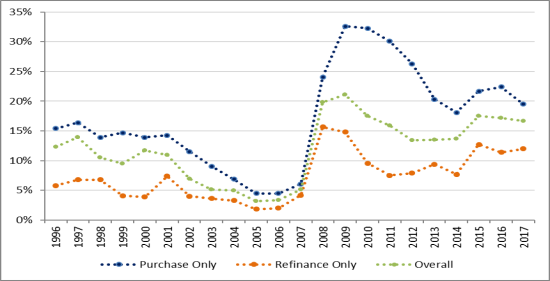
by Geetesh Bhardwaj and Rajdeep Sengupta in Federal Reserve Bank of St - the big short who took out mortgages. Louis Working Paper, October 2008 This paper demonstrates that the reason for extensive default of home loans in the subprime market was an abrupt reversal in your house cost appreciation of the early 2000's. Using loan-level information on subprime home mortgages, we observe that the bulk of subprime loans were hybrid adjustable rate home mortgages, designed to enforce significant financial ...
Kocherlakota in Federal Reserve Bank of Minneapolis, Go here April 2010 Speech before the Minnesota Chamber of Commerce by Souphala Chomsisengphet and Anthony Pennington-Cross in Federal Reserve Bank of St. Louis Review, January 2006 This paper explains subprime loaning in the home loan market and how it has actually progressed through time. Subprime loaning has presented a significant amount of risk-based prices into the home loan market by producing a myriad of prices and item options mostly figured out by debtor credit rating (mortgage and rental payments, foreclosures and bankru ...